The Evolution of Backend Frameworks Supporting Multilingual Card Game Interfaces Across Central European Digital Markets
Jakob Keller · Nov 8, 2026
The Evolution of Backend Frameworks Supporting Multilingual Card Game Interfaces Across Central European Digital Markets
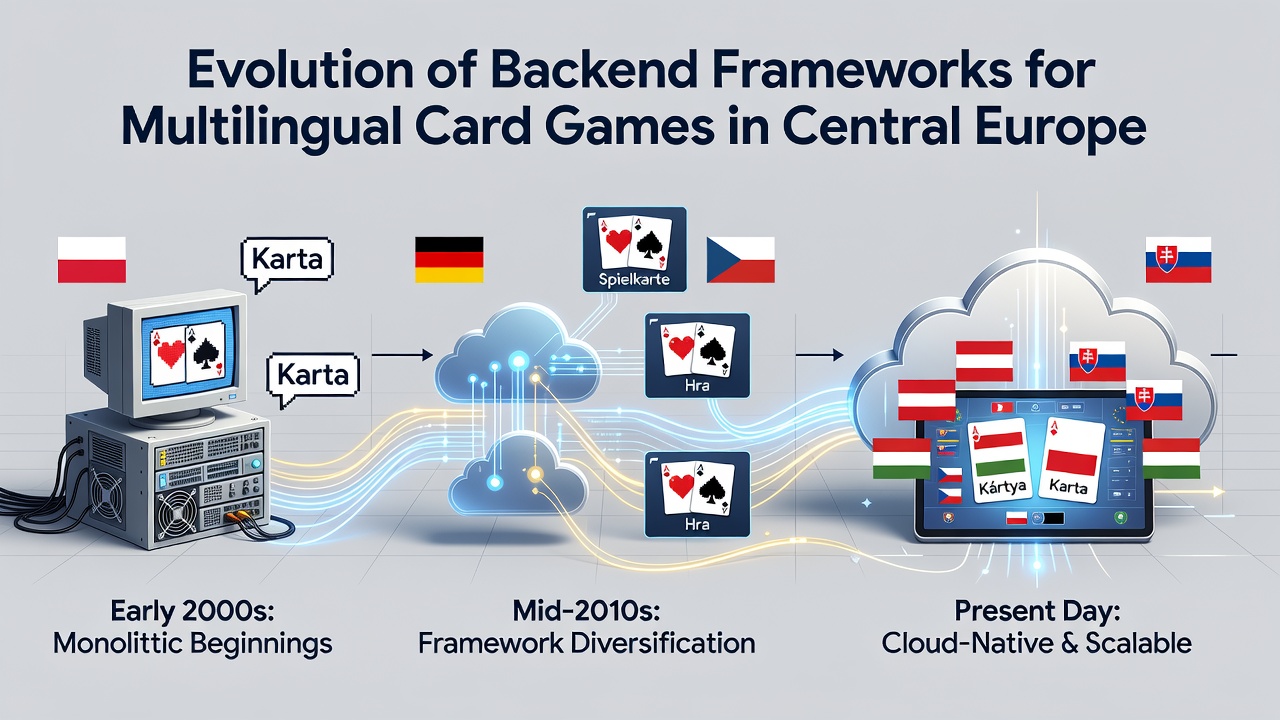
Backend frameworks have shifted from basic server-side scripting tools in the early 2000s toward sophisticated systems that manage localization, real-time data synchronization, and user-specific language preferences in card game applications across Germany, Austria, Switzerland, and neighboring markets. Developers built initial solutions around PHP and early Java frameworks which handled single-language interfaces but required extensive custom code when platforms expanded into multilingual environments where German, French, Italian, and Czech users accessed the same game servers simultaneously.
Early Framework Limitations and Regional Expansion
Monolithic architectures dominated the first generation of these systems because they integrated database queries, session management, and content rendering in single codebases, yet they struggled when operators introduced card game variants for diverse linguistic groups. Research from European digital economy studies shows that companies in Austria and Germany began migrating toward modular designs around 2010 as market demand for localized interfaces grew, driven by regulatory changes that encouraged cross-border digital services. Observers note that frameworks like Symfony and Zend Framework gained traction because they offered built-in support for translation files and locale-aware routing, allowing teams to separate language assets from core game logic without rewriting entire applications.
Adoption of Modern Backend Technologies
Node.js and Python-based frameworks entered widespread use by the mid-2010s because they supported asynchronous processing essential for live card game sessions where multiple players join from different language regions. Data from industry reports indicates that Spring Boot became particularly popular in German-speaking markets for its robust internationalization libraries and integration with relational databases that stored card game rules alongside translated descriptions. Teams implemented microservices architectures which isolated language handling into dedicated services, reducing latency for users switching between interfaces while maintaining consistent game state across sessions. What's interesting is how these changes aligned with broader EU digital single market initiatives that promoted interoperability standards for online platforms serving multiple member states.
Handling Multilingual Challenges in Card Game Interfaces
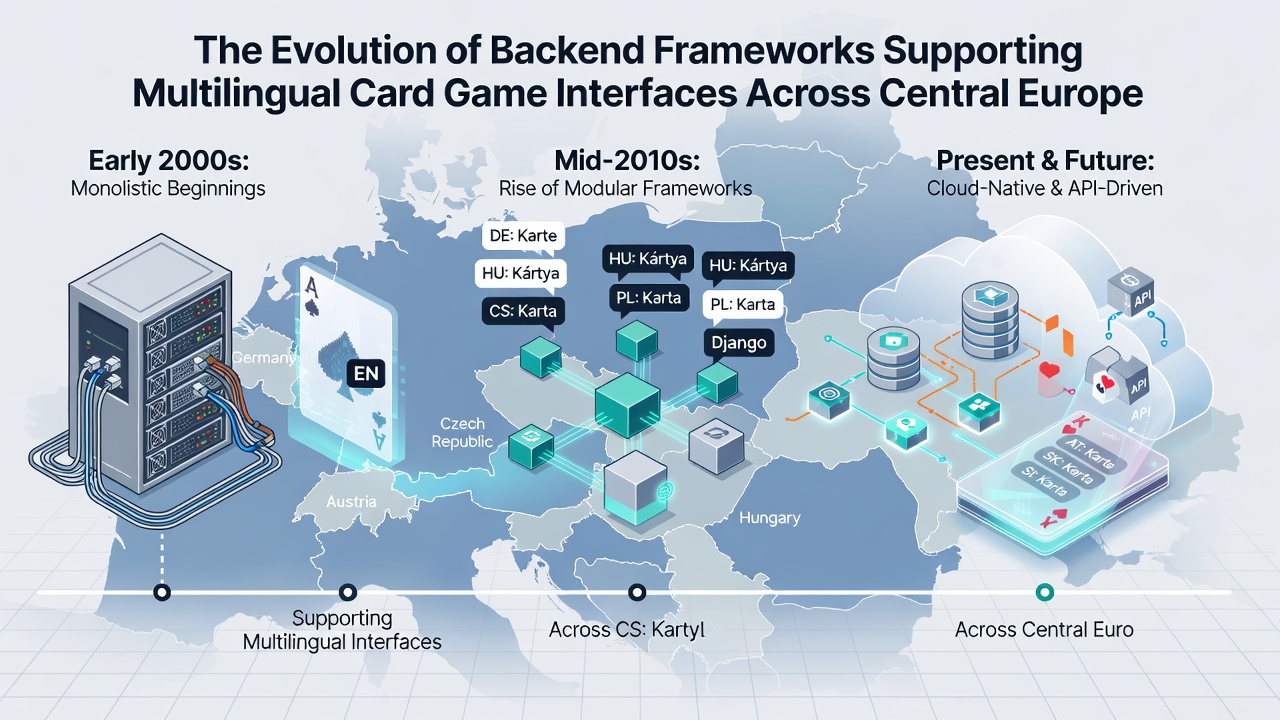
Central European operators faced specific technical demands when supporting card games that include region-specific terminology, such as traditional variants played in Switzerland or the Czech Republic. Backend systems evolved to incorporate dynamic content loading mechanisms that pull translations from centralized repositories, often using JSON structures or database tables indexed by locale codes. Researchers at institutions studying digital gaming infrastructure found that frameworks incorporating GraphQL allowed efficient querying of multilingual card data without overloading servers during peak traffic periods. Integration with content delivery networks further optimized delivery of localized assets, ensuring that players in Austria received German-language prompts while French-speaking users in Switzerland accessed equivalent content from the same backend cluster. And because real-time updates to game rules required immediate propagation across languages, developers adopted event-driven patterns in frameworks like NestJS and Laravel that broadcast changes without requiring full redeployments.
Recent Developments Through Late 2026
By November 2026, cloud-native frameworks had become standard because they scaled language processing workloads independently from core game engines, according to analyses published by research groups tracking European technology adoption. Container orchestration tools paired with frameworks such as Go-based services enabled operators to deploy region-specific micro-frontends that communicated with shared backend APIs handling card game mechanics. Studies from academic sources in Switzerland highlight how database schemas evolved to support pluralization rules and gender agreements unique to Central European languages, reducing errors in automated translations for game instructions and chat features. External partnerships with localization platforms integrated directly into CI/CD pipelines, allowing continuous updates to card game terminology without interrupting live sessions for users across Austria and Germany.
Industry organizations have documented the role of open-source contributions that added multilingual middleware to popular frameworks, facilitating adoption among smaller development teams serving niche card game communities. Figures from digital market reports reveal steady growth in platforms offering simultaneous support for four or more languages, with backend solutions emphasizing API versioning to maintain compatibility as language packs expanded. Those who track these trends note that security considerations, including encrypted storage of user language preferences, became embedded in framework defaults rather than added as afterthoughts.
Conclusion
The progression of backend frameworks reflects broader technological maturation in response to Central European market requirements for seamless multilingual card game experiences. Continued refinement of internationalization features within established and emerging frameworks positions these systems to accommodate additional languages and regulatory variations while preserving performance and consistency across digital platforms.